Using ShowcaseAI to Scale Product Video Without a Production Team
In 2026, small business marketing has changed completely.
The biggest problem is no longer product quality. Most small businesses already have good products. The real problem is visibility. Customers cannot buy what they never notice.
Every day, buyers scroll through hundreds of posts, ads, and listings. Online stores, marketplaces, and social media feeds are overcrowded. Because of this, even useful products often fail to sell.
Many business owners believe they need better pricing, more discounts, or expensive advertising. In reality, they usually need something much simpler: a clear product presentation.
Short videos now dominate online discovery. They stop the scroll, explain the product quickly, and build trust faster than images. However, traditional video production is slow, costly, and difficult to repeat. Hiring creators, arranging shoots, editing footage, and preparing different formats becomes impossible for most small teams.
This is where a new system becomes important.
Instead of producing videos manually each time, businesses can now automatically convert product visuals into ready-to-use marketing videos. Platforms like ShowcaseAI allow sellers to upload product photos once and generate multiple cinematic, ad-style, and UGC-style videos in minutes. The goal is not to make one perfect video — it is to make marketing repeatable.
1. Change the Mindset: Your Product Is a Marketing Asset
Many sellers treat a product image as a listing requirement. They upload a few photos and consider marketing complete.
This approach no longer works.
Products rarely fail because they are bad. They fail because customers do not understand them quickly. Online buyers make decisions within seconds. If they cannot visualize how a product fits into their life, they move on.
Instead, treat every product as a reusable selling asset. A single product can appear in multiple formats:
- a quick demonstration
- a problem-solution ad
- a social media reel
- a marketplace listing video
- an explainer clip
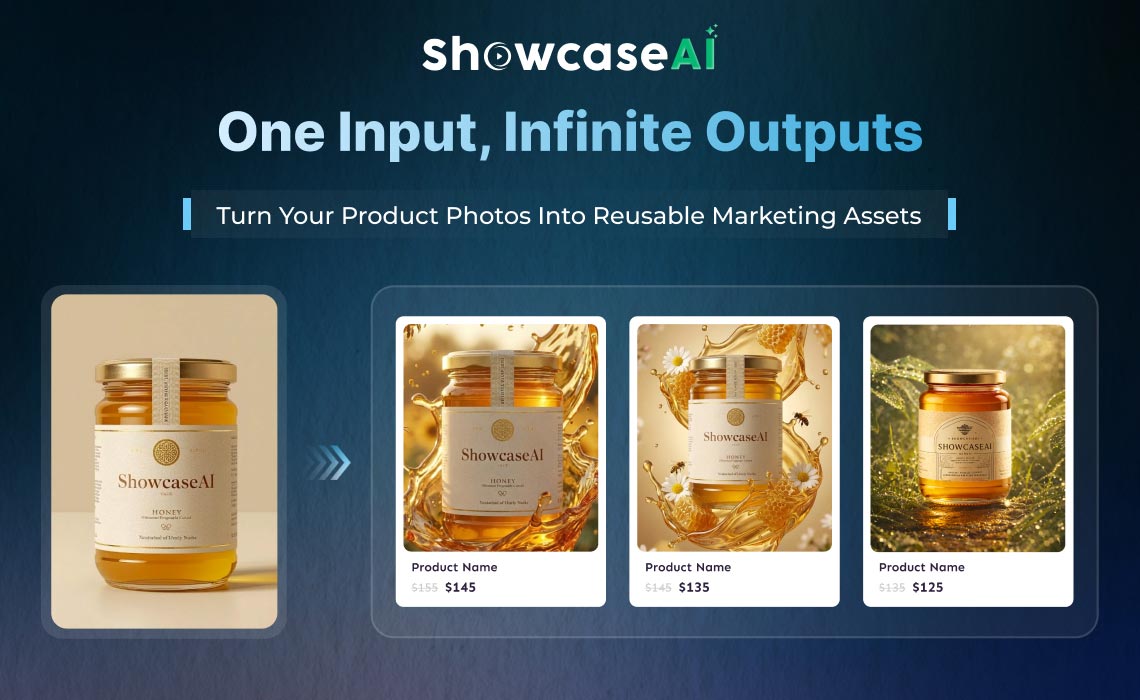
ShowcaseAI is built around this idea. Rather than creating a new shoot for every platform, the same product input can generate multiple marketing outputs automatically.
When a product becomes a reusable asset, marketing becomes consistent instead of occasional.
2. The Highest-Impact Change: Start Using Short Videos Consistently
Short videos now outperform images in both discovery and conversion.
For small businesses, this does not mean becoming a filmmaker. It means presenting products clearly and repeatedly.
A practical video structure looks like this:
- 6–12 second hooks for ads
- 15–30 second demos for social media
- 30–60 second explainers for product pages
Traditionally, producing these variations requires multiple shoots and editing work. This is why many sellers stop after creating one video.
AI-generated video removes this limitation. The same product photos can be transformed into multiple styles and lengths. A seller can test different messaging angles without restarting production every time.
Consistency becomes possible. Instead of posting randomly once a month, businesses can publish regularly and stay visible.
3. A Simple Weekly Playbook You Can Start Immediately
You do not need a large team to begin. You only need a structured workflow.
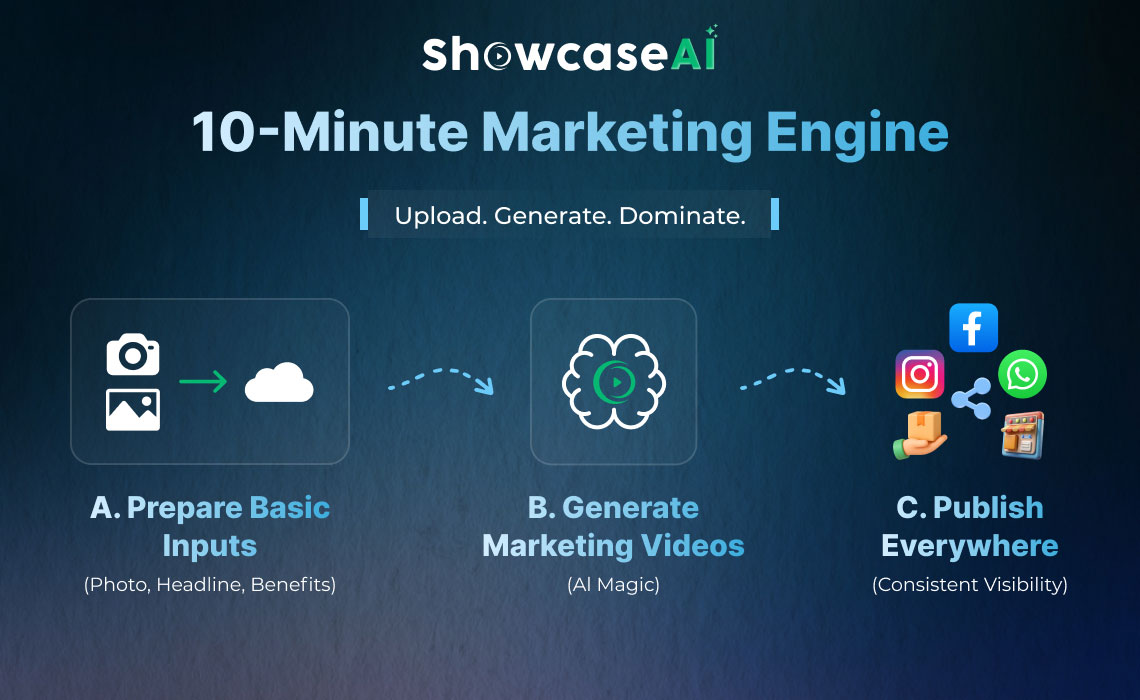
Step A — Prepare Basic Inputs
Gather three simple things:
- clear product images (2–5 angles)
- a short headline
- three key benefits
- one real use-case
No studio shoot is required. Clean lighting and clear framing are enough.
Step B — Generate Marketing Videos
Upload the product visuals to ShowcaseAI and select a video style such as demo, ad, or social content. The system produces multiple ready-to-use videos in different formats.
Small edits can be made if needed, but the core production is automatic.
Step C — Publish Everywhere
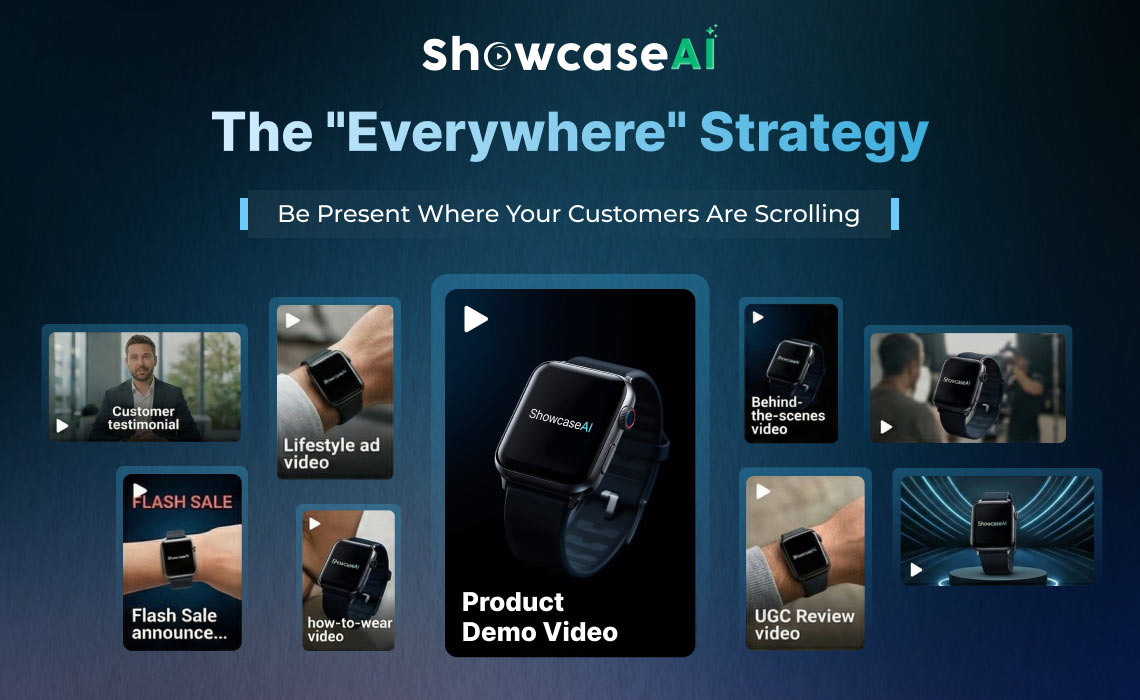
Use the same videos across:
- Instagram Reels
- Facebook posts
- WhatsApp Status
- Product pages
- Marketplace listings
The advantage is simple:
one product → many marketing formats
This removes the biggest marketing bottleneck — starting from zero each time.
4. Eight Practical Marketing Ideas That Work
These strategies require a low budget and become significantly easier with automated video generation.
- Micro Demonstrations
Post short product demos two or three times per week. Each video can highlight a different feature or benefit.
- UGC-Style Trust Content
Customers trust realistic content more than polished ads. Generate user-style videos that show how the product is actually used.
- Ad Variation Testing
Create multiple short ad hooks from the same product and run small tests. Even a slight improvement in click-through rate can double performance.
- WhatsApp Product Drops
Short videos perform better than images in broadcast lists because they quickly explain the product.
- Product Page Video
Adding a demonstration video to a listing often improves conversion because customers can visualize the product clearly.
- FAQ Explainers
Create short clips answering common questions such as size, usage, or setup.
- Cross-Platform Repurposing
One video can be resized and reused across reels, shorts, stories, and listings.
- Flash Sale Creatives
For limited offers, generate new angles quickly instead of designing creatives from scratch.
5. Build a Workflow That Scales
Marketing fails when it depends on motivation. It works when it depends on a system.
Try a repeatable weekly routine:
Monday — generate new videos for two products
Wednesday — publish social content
Friday — test short ad variations
Because new shoots are unnecessary, content does not run out. The business always has material ready to publish.
The goal is to make marketing predictable.
6. Use Video as Infrastructure, Not a Project
Many businesses treat video as a special event. They plan, shoot, edit, post once, and stop.
That is outdated.
Video should function like infrastructure — something you can reuse continuously. Maintain a simple product library containing:
- Product photos
- Benefits
- Use-cases
- Video styles
Whenever a campaign is needed, generate new variations instead of starting production again.
This transforms marketing from effort-based to system-based.
7. Metrics That Actually Matter
Do not track everything. Track what affects sales.
Watch these four metrics:
- click-through rate on ads
- engagement rate on short videos
- conversion rate on product pages
- cost per click after testing variations
If a single video performs slightly better, expand it immediately. Small improvements compound quickly when repeated across platforms.
8. Quick Wins You Can Implement Today
You can see results without increasing your budget.
Try this:
Convert one product image into three video styles and post across social platforms.
Replace a top product image on your store with a short demo video.
Run a one-week test using multiple ad variations.
These small changes often produce measurable improvement because they improve understanding, not just promotion.
Conclusion
Small business marketing in 2026 is not about creating one viral advertisement. It is about staying visible consistently where customers already spend time.
Buyers respond to clarity. Video provides clarity faster than images.
The real advantage of tools like ShowcaseAI is not just automation. It is repeatability. A business can upload a product once and continuously produce marketing content without waiting for shoots, editors, or creators.
When marketing becomes a system instead of a task, businesses stop struggling for attention. They simply remain present.
Start simple: choose your best-selling product, generate a few video styles, and publish them this week. Consistent visibility — not occasional effort — is what turns a product into a reliable seller.